4.9 ★ on Google · 1,000+ reviewsChild Actor From Krrish, Now A Successful Eye SurgeonMBBS · MS · FICO (London) · MRCS (Edinburgh)I'm An Eye Surgeon Today, But I'm Open To Acting TooSame-day cataract surgeryKurla BKC · Kalina · Bandra WThe 'Little' Hrithik Roshan In Krrish Is Now An Eye SurgeonBlade-free Contoura LASIKFeatured — NDTV · Times of India · News18 · Deccan Chronicle · Asian Age4.9 ★ on Google · 1,000+ reviewsChild Actor From Krrish, Now A Successful Eye SurgeonMBBS · MS · FICO (London) · MRCS (Edinburgh)I'm An Eye Surgeon Today, But I'm Open To Acting TooSame-day cataract surgeryKurla BKC · Kalina · Bandra WThe 'Little' Hrithik Roshan In Krrish Is Now An Eye SurgeonBlade-free Contoura LASIKFeatured — NDTV · Times of India · News18 · Deccan Chronicle · Asian Age


Home/Services/ICL (Implantable Collamer Lens)

ICL (Implantable Collamer Lens) in Mumbai – Kurla BKC, Kalina & Bandra W

ICL (Implantable Collamer Lens), also known as the EVO ICL, is a premium vision correction option for patients who are not suitable for laser surgery — particularly those with very high prescriptions, thin corneas, or severe dry eye. Unlike laser procedures, ICL adds a lens inside the eye without removing any corneal tissue.
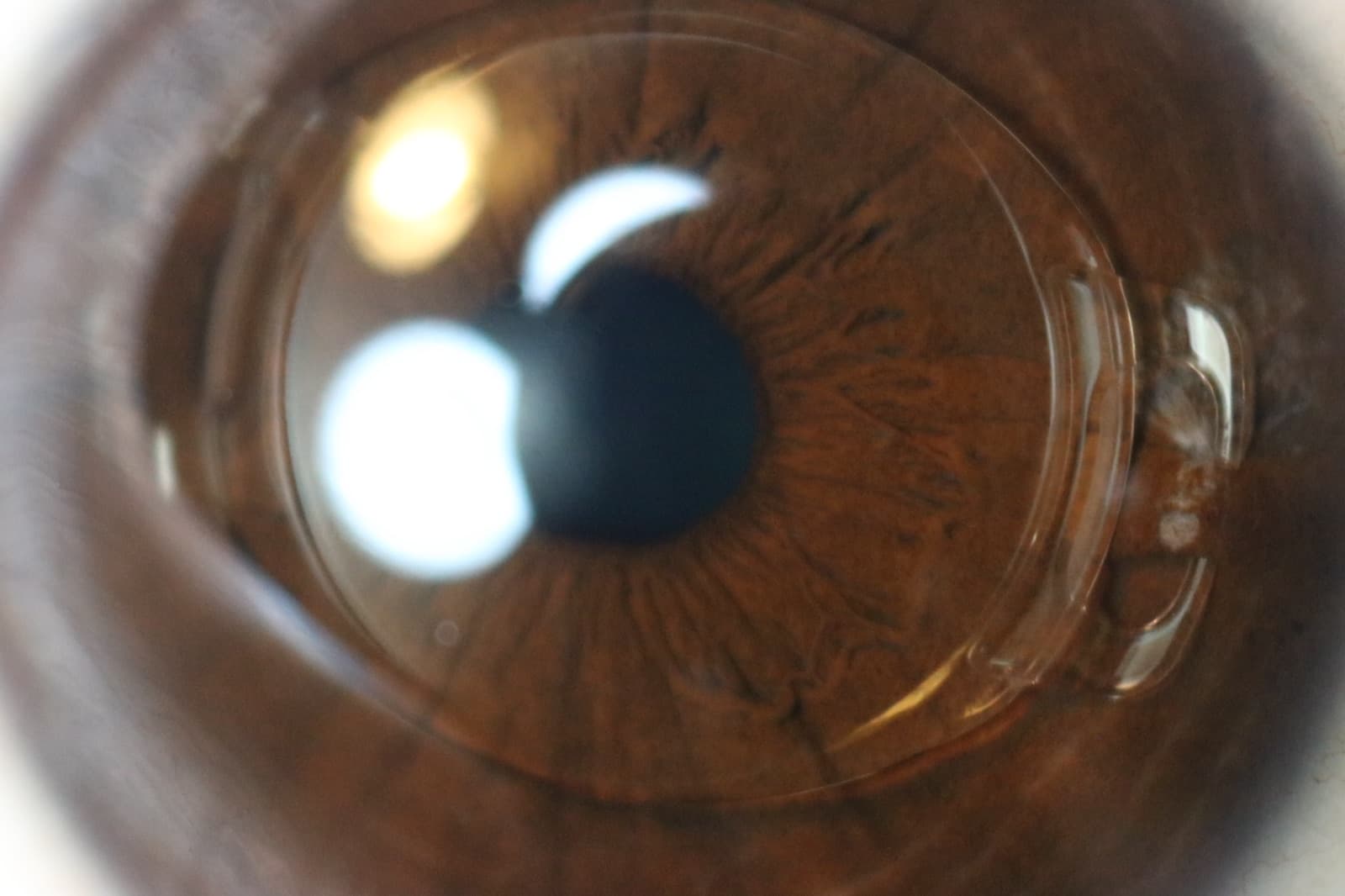
ICL (Implantable Collamer Lens)
01

What Is ICL (Implantable Collamer Lens)?

A soft, foldable Collamer lens is implanted through a tiny incision and positioned between the iris and the natural crystalline lens. It stays in place permanently but can be removed if needed — making it the only reversible surgical vision correction available. The natural lens is left completely untouched.

02

Who Is It For?

This procedure is generally suited to patients meeting the following criteria:

  • High myopia (up to –20 D) or hyperopia (up to +10 D) not treatable with laser
  • Thin corneas or significant dry eye making laser surgery unsuitable
  • Age 21–45 (before presbyopia significantly affects the lens)
  • Desire for the highest quality of vision with a reversible option
03

What Happens During the Procedure?

Each step is performed with precision and patient comfort in mind.

  • Step 1: Pre-op measurements: white-to-white diameter, anterior chamber depth, and prescription
  • Step 2: A custom ICL is ordered from the manufacturer
  • Step 3: On the day: tiny incision made, ICL folded and inserted, positioned behind the iris
  • Step 4: No sutures — incision self-seals; vision usually clear by the next morning
04

Recovery & What to Expect

Most patients see clearly within 24 hours. Mild haziness or halos around lights settle within a week. Antibiotic and steroid drops are used for 4 weeks. Avoid swimming and contact sports for 2 weeks.

05

Benefits

Patients choosing this procedure typically experience the following benefits:

  • No corneal tissue removed — structurally the most conservative option
  • Treats prescriptions too high for laser
  • Fully reversible — the lens can be removed at any time
  • Excellent night vision quality with the latest EVO ICL design (no central hole needed in older models)
FAQFrequently Asked Questions

No. The lens is placed in a position where there are no pain receptors. Once in place, patients are completely unaware of its presence.

The ICL remains functional indefinitely. As you develop presbyopia in your 40s, reading glasses may be needed as with anyone else. The ICL does not affect this process.

It is priced higher than laser procedures due to the custom-manufactured lens. However, for suitable candidates it delivers outstanding quality of vision that is difficult to match otherwise. Dr. Mickey's team will discuss the cost at your evaluation. Made-in-India Phakic Lens Options at Doctor Mickey's At Doctor Mickey's Eye Care Center, we believe that outstanding vision correction should be accessible to everyone. Alongside the globally recognised EVO ICL, we also offer two high- quality phakic intraocular lenses developed in India — the Eyecryl Phakic IOL and the IPCL (Implantable Phakic Contact Lens). Both are manufactured to rigorous international standards, offer results comparable to their international counterparts, and come at a significantly more accessible price point for Indian patients. Eyecryl Phakic IOL The Eyecryl Phakic IOL is a premium hydrophilic acrylic lens developed by Biotech Vision Care, an Indian manufacturer. It is designed to correct high myopia and astigmatism in patients who are not suitable candidates for laser vision correction. Like all phakic lenses, it sits behind the iris while leaving the natural crystalline lens completely untouched — no corneal tissue is altered, and the procedure is fully reversible. The lens is made from a soft, foldable, biocompatible material that allows implantation through a small incision. It is available in monofocal and toric (astigmatism-correcting) versions. Crucially, because it does not interact with the corneal surface, it does not cause or worsen dry eye — a meaningful advantage over laser procedures for susceptible patients. Key advantages of the Eyecryl Phakic IOL • Corrects high myopia, hyperopia, and astigmatism in eyes unsuitable for LASIK • Hydrophilic acrylic material — biocompatible, foldable, and well-tolerated long-term • Available in toric design for astigmatism correction • Does not cause dry eye — the cornea is not touched • Reversible — the lens can be removed or exchanged if needed • Cost-effective compared to imported phakic IOL options IPCL (Implantable Phakic Contact Lens) The IPCL, developed by Care Group India, is a fully customised soft phakic lens manufactured to the specific dimensions of each patient's eye. It has one of the widest correction ranges of any phakic lens currently available — treating myopia up to –30 D, hyperopia up to +15 D, and astigmatism up to 10 D — making it suitable even for very high prescriptions that lie beyond the reach of other phakic lenses or laser surgery. The IPCL is implanted through a 2.8 mm incision under topical anaesthesia (eye drops only) in a procedure that takes around 15–20 minutes. The lens incorporates a central micro-opening that maintains natural aqueous circulation within the eye, reducing the risk of cataract formation or pressure build-up. The IPCL V2.0 also offers a trifocal presbyopic design for patients who want clear vision at near, intermediate, and distance without reading glasses. Key advantages of the IPCL • Widest prescription correction range of any phakic IOL — myopia up to –30 D • Custom-manufactured for each individual eye's internal dimensions • Central microhole design maintains healthy aqueous flow • IPCL V2.0 Presbyopic: trifocal option for near, intermediate, and distance vision • Quick recovery — most patients see clearly within 24–48 hours, return to routine in 2–3 days • Performed under eye drop anaesthesia — no injections needed • Fully reversible Pre-surgery preparation for all phakic IOL procedures • Soft contact lenses: stop 5–7 days before surgery; rigid or gas-permeable lenses: stop 3–4 weeks before • Comprehensive pre-operative workup: Pentacam corneal mapping, anterior chamber depth measurement, endothelial cell count, and dilated retinal check • Avoid alcohol and smoking in the days leading up to surgery • Arrange for a companion to accompany you on the day — you will not be able to drive home

All three are phakic intraocular lenses that sit behind the iris, preserve the natural lens, correct high prescriptions without touching the cornea, and are reversible. The primary differences are in correction range, design specifics, manufacturer origin, and cost. The EVO ICL (STAAR Surgical, USA) is the most extensively studied globally. The Eyecryl and IPCL offer equivalent safety and efficacy with the advantage of significantly lower cost, making them the right choice for many patients. Dr. Mickey will assess your eye measurements, prescription, and preferences to recommend the most suitable option for you.

Considering icl?

Book a personalised consultation with Dr. Mickey. We'll evaluate your eyes carefully and walk you through whether this procedure is right for you.

WhatsApp Us →

This page is informational only and is not a substitute for medical consultation. Eligibility, outcomes, and risks of any clinical procedure depend on an in-person assessment.